
The Shape of Time: Design, Theology, and the Structure of the Created Order

Garreth Blackwell
- February 14, 2025
- 6 Min Read
Time as a Created Reality
“Time is lost when we have not lived it or filled it with eternal meaning. Time is redeemed when we live it in the awareness of its purpose in God.” — Dietrich Bonhoeffer
The human experience is inextricably bound to time. We measure it, organize it, lament its passing, and attempt to master it. Time is the silent structure under which all human action takes place. Yet, unlike material objects that we craft with our hands, time itself cannot be shaped by human effort—it is woven into the very fabric of creation.
In Genesis 1:14, God declares, “Let there be lights in the expanse of the heavens to separate the day from the night. And let them be for signs and for seasons, and for days and years.” Time is not a human invention; it is an aspect of the created order, a reality divinely spoken into being. While modern man tends to think of time as a neutral backdrop to human activity, Scripture insists that time is purposeful, filled with divine meaning and direction.
C.S. Lewis captures this in The Screwtape Letters, where the demon Screwtape warns that God is “a hedonist at heart,” who “has made the pleasures for His own sake,” but He has placed them within time. “He gives His creatures a present moment to do as they will, but the past belongs to His justice, and the future to His sovereignty.” Time, for the Christian, is neither cyclical nor arbitrary—it is teleological, moving toward a fixed and ordained end.
This stands in stark contrast to the pagan and secular view of time. The ancients saw time as an endless cycle of life, death, and rebirth. Many moderns view it as a meaningless progression, a string of moments with no inherent direction. The Christian view, however, is that time moves toward something—toward the fulfillment of God’s redemptive plan in Christ.
Thus, our very attempts to measure, structure, and design systems of timekeeping reflect a theological reality. The question is not whether time will be ordered, but how it will be ordered—and who will define that order.
The Human Desire to Structure Time
“The calendar is a more theological document than the catechism.” — R.J. Rushdoony
From the earliest days of civilization, man has sought to design systems to measure and control time. The Egyptians built obelisks to track the sun’s movement. The Babylonians established a 60-based system of time, dividing hours into minutes and seconds. The Julian and later Gregorian calendars attempted to synchronize human history with astronomical reality.
This structuring of time is not merely practical—it is an act of dominion. As R.J. Rushdoony notes, the calendar itself is a theological declaration. Whose years do we count? Whose feasts do we mark? What events are considered significant enough to be remembered? These are not neutral questions; they are questions of authority.
The Western world’s use of A.D. (“Anno Domini,” in the year of our Lord) and B.C. (“Before Christ”) reflects a recognition that history is not merely a string of moments—it is divided by the Incarnation. Even secular attempts to replace this with “BCE” (Before Common Era) and “CE” (Common Era) cannot erase the fact that history is split by the coming of Christ.
And yet, we do not merely measure time—we attempt to master it.
• The invention of mechanical clocks in medieval monasteries reflected the monastic commitment to structuring time for prayer, devotion, and labor. Time was divided, not for commerce, but for worship.
• The development of Harrison’s marine chronometer in the 18th century allowed man to conquer the unpredictability of the sea, giving him unprecedented control over navigation and trade.
• The rise of industrial timekeeping in the modern era has reordered life itself, replacing natural rhythms with the mechanized beat of factory shifts and productivity schedules.
These systems of timekeeping reveal something profound: Man was made for order. As Cal Seerveld writes, “The artist, the craftsman, the designer—all create out of a God-given urge to bring form to the formless, to bring order out of chaos.” We structure time because we are made in the image of a God who orders the universe.
But what happens when this urge to structure time becomes an attempt to replace the divine order?
When Time Becomes an Idol
“We are not the authors of time. We are only stewards of it.” — Joe Boot
In our obsession with timekeeping, we often move from orderly dominion to idolatrous control. We attempt to bend time to our own desires, treating it as a resource to be manipulated rather than a gift to be received.
Consider:
• John Harrison’s chronometer was designed to bring order to oceanic chaos, but its legacy led to an era where precision and productivity became ultimate values.
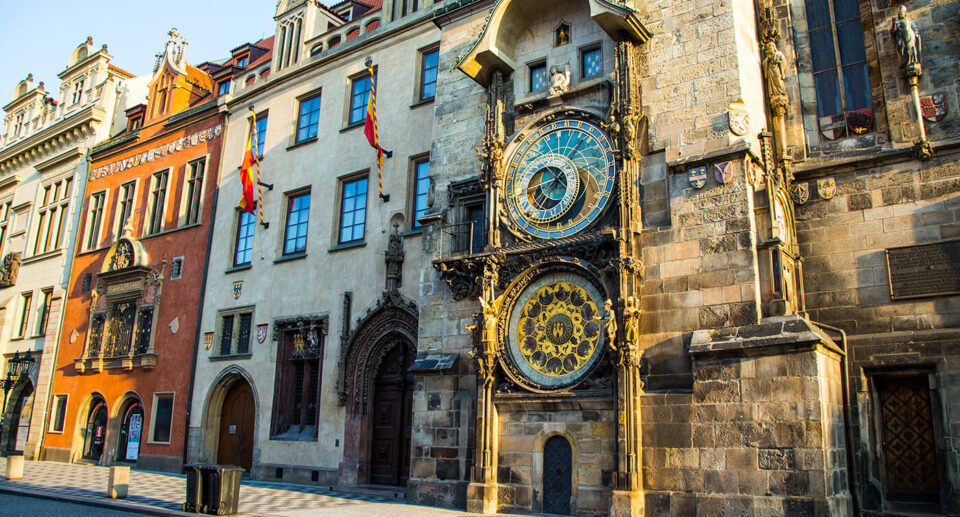
• The Prague Astronomical Clock was meant to glorify human ingenuity, but it became an object of political manipulation and legend.
• Dalí’s The Persistence of Memory presents a world where time dissolves, reflecting the modern nihilistic view that time itself is unstable and meaningless.
When time is no longer seen as a gift from God, it becomes either a tyrant (enslaving us to the unrelenting march of seconds and deadlines) or a void (a meaningless drift toward entropy).
Dallas Willard addresses this in The Divine Conspiracy: “We spend our lives anxiously managing time, fearful of waste, fearful of loss. But eternity is not merely the absence of time—it is the fullness of time under the rule of Christ.”
The modern world urges us to maximize every moment, to make time serve us. But Christ commands us to redeem the time (Ephesians 5:16), to align our days, hours, and minutes with the purposes of the Kingdom.
The Gospel and the Restoration of Time
“In Christ, time is no longer a countdown to decay—it is a movement toward eternity.”
This is where all timekeeping, all design, all human order must bow.
Christ is not merely the Lord of history—He is the Lord of Time itself. The Incarnation split history in two. The Cross was the fulcrum upon which all time pivots. The Resurrection was the moment when death’s grip on time was shattered.
Tim Keller once wrote, “Every culture is trying to find a way to beat time—whether through legacy, achievement, or denial. But only Christianity offers true hope: time will be redeemed, restored, renewed.”
Revelation 21:5 declares, “Behold, I am making all things new.” This includes time. No longer a cycle of decay. No longer a force we struggle to master. But a reality eternally held in the hands of God.
So we return to the question: Are we shaping time rightly?
Not merely in how we measure it, but in how we live it.
Are our hours shaped by the Gospel? Is our daily rhythm ordered according to Christ’s Kingdom? Or are we simply marking time—counting the minutes until they slip away?
Because time is not ours. It belongs to the One who made it.
And He is bringing it to a glorious end.